Everyone's burned out, and by the time you finally got the books closed, leadership was already asking questions about numbers that felt outdated the moment you delivered them.
Or maybe you're in the middle of one right now, watching the days pile up while reconciliations drag on and data keeps coming in from different systems. Either way, you know something's off when you consistently eat up more than a full work week every single month.
According to research from APQC's 2018 benchmarking survey of 2,300 organizations, the median finance team takes 8.0 days to close its books each month. That's more than a full workweek dedicated to reconciliations, locating data, and assembling reports.
And that's just the median. Companies still stuck in manual processes often take 10 days or longer. If you're managing multiple entities or subsidiaries, you already know those numbers can easily double.
Why a Slow Close Hurts More Than You Think
The worst part isn't even the time itself; it's everything that happens because of it. Your CFO can't make decisions because they don't have current numbers. Your team is working late nights and weekends. Revenue recognition questions pile up. Meanwhile, your competitors who've figured out faster closings? They're already acting on last month's data while you're still finalizing it.
Look, the month-end close has always been a grind, but that doesn't mean it has to stay that way. There are teams out there closing in 3 to 5 days, and they're not working harder than you. They're just working differently.
So let's dig into what's actually happening during these marathon closes, figure out where your team stands compared to others, and talk about some practical ways to speed things up without compromising accuracy.
Where Do You Stand? Month-End Close Benchmarks
Here's the thing about close time - the gap between average teams and top performers is massive. And I'm not talking about huge companies versus small ones. I'm talking about process efficiency. When you look at the latest benchmarking data, here's what stands out:
Median teams: 6.4 days (from APQC's survey)
Top performers (top 25%): 4.8 days or less
Bottom performers (bottom 25%): 10 days or more
Best-in-class teams: Only 18% close in 3 days or less
Ledge's 2025 benchmarking study really puts this in perspective. They found that only 18% of finance teams can close in three days or less. Think about that. Eighty-two percent of organizations are taking longer than what people consider world-class.
Another data point: research from Ventana shows that 53% of companies complete their month-end close within six days; that means almost half are taking a week or longer.
But here's what's really interesting: company size doesn't predict close time as much as you'd think. Small businesses with chaotic processes can take just as long as massive enterprises, and mid-market companies with tight processes often close faster than Fortune 500 companies.
The difference isn't the budget, and it's definitely not team size; it's process efficiency and smart use of technology.
Why Your Close Takes Forever
Ever feel like your close process is held together with spreadsheets and hope? There's usually a good reason for that feeling.
When you talk to finance teams about their close bottlenecks, the same problems come up over and over. Let me walk you through the big ones.
Data Collection Turns Into a Scavenger Hunt
This is where so much time disappears. You're pulling data from Xero. Then QuickBooks. Maybe you've got multiple instances of the same platform for different entities. Nothing talks to each other automatically, so you're manually exporting, copying, and pasting.
Someone emails you a spreadsheet. Then they email you an updated version. Then another person sends their version. You're trying to figure out which one is actually current. It's chaos.
According to Ledge's 2025 study, 94% of teams still rely on Excel for close activities, and half of those teams cite it as a key reason their close runs slow.
Manual Reconciliations That Never End
Bank reconciliations. Intercompany eliminations. Revenue recognition schedules. Aged Payables aging and Aged Receivables aging reconciliations. For most teams, all of this lives in Excel. One wrong formula somewhere can throw off your entire close.
And here's the kicker - these manual processes don't scale. Your business grows, and the reconciliation work grows even faster. You end up needing more people just to keep up with the same tasks.
The same Ledge study found that cash reconciliation alone takes 20 to 50 hours each month for many finance teams - and if even one source is delayed, it pushes back the entire close.
Multi-Entity Consolidation Becomes a Nightmare
If you're running multiple entities or subsidiaries, you know this pain intimately. Each entity closes at a different time. Intercompany transactions don't match up. Eliminations need manual adjustments that everyone's afraid to touch because they're so easy to mess up.
For companies managing multiple entities, consolidation often doubles or triples the close time compared to single-entity businesses.
Version Control Chaos
"Is this the final version?"
If you've asked this question more than once during a close, you know exactly what I'm talking about. Spreadsheets get emailed around. People make changes. Someone's working off yesterday's version. Another person saved their changes to a file on their desktop. By the time everyone's on the same page, you've burned another day.
Nobody Knows What's Actually Done
"Hey, where are we with close?"
This should be a simple question with a quick answer. But when your process doesn't have any real visibility, answering it requires hunting down three different people, checking multiple spreadsheets, and piecing together status updates from Slack messages and emails.
Nobody can tell you what's complete, what's in progress, where the bottlenecks are, or who's waiting on what.
What Slow Closes Actually Cost You
A slow close isn't just an accounting department problem. The impact spreads way beyond your finance team.
Your Leadership Team Is Flying Blind
When your executives don't have current financial data, they're making decisions based on old information. Maybe they're over-investing in areas that are actually underperforming. Maybe they're missing early warning signs of cash flow issues. Maybe they're making commitments without knowing if the numbers actually support them.
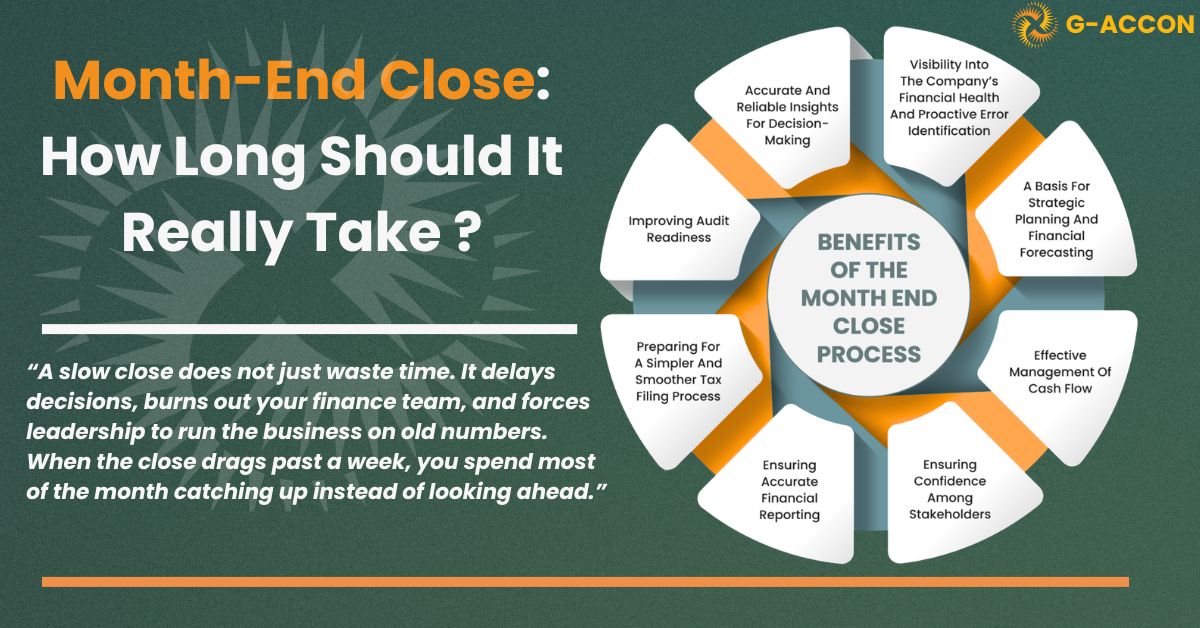
The Ledge study notes that when closes take longer than five days, "financial insights arrive late, business decisions are slower, and the finance team spends most of the month catching up instead of looking ahead."
Your Team Burns Out Fast
Late nights every month. Working weekends. The constant stress of trying to go faster while also being more accurate. This isn't sustainable, and your best people definitely know it.
Finance teams stuck in long close cycles report significantly higher turnover rates compared to teams with streamlined processes. Your best people leave because they're tired of the grind.
Audit Season Gets Even Worse
A messy close process makes audit season exponentially more painful. When your documentation is scattered across different spreadsheets, email chains, and people's desktops, you'll spend weeks just getting ready for the auditors to show up.
Companies with well-documented, automated close processes spend significantly less time on audit prep. That's cutting your audit prep time substantially just by fixing your close process.
You're Losing Ground to Competitors
Think about this. While you're still closing last month's books, your competitors with faster processes already have their numbers. They're already making moves based on that data. Adjusting pricing. Shifting resources. Making strategic decisions.
In fast-moving markets, having week-old data beats having perfect data that's a month old. Speed matters.
How to Actually Speed Up Your Close
Good news: you don't need a massive transformation project to improve your close time. Lots of finance teams have cut their close in half by focusing on a few key changes. Let's talk about what actually works.
Build a Real Close Calendar
This sounds basic, but tons of teams don't actually have a documented, day-by-day close calendar that everyone follows.
You need a timeline that shows every single task, who owns it, when it needs to be done, and what depends on it. When everyone knows exactly what needs to happen and when, you eliminate so much of the confusion that adds days to your close.
The key is documenting everything upfront. When you map out every task with clear ownership and dependencies, your team stops wondering what needs to happen next. They can see exactly where they fit in the process and what's blocking their work.
Stop Doing Data Consolidation Manually
If you're manually pulling data from different accounting systems and stitching it together in Excel, that's your biggest opportunity for improvement right there.
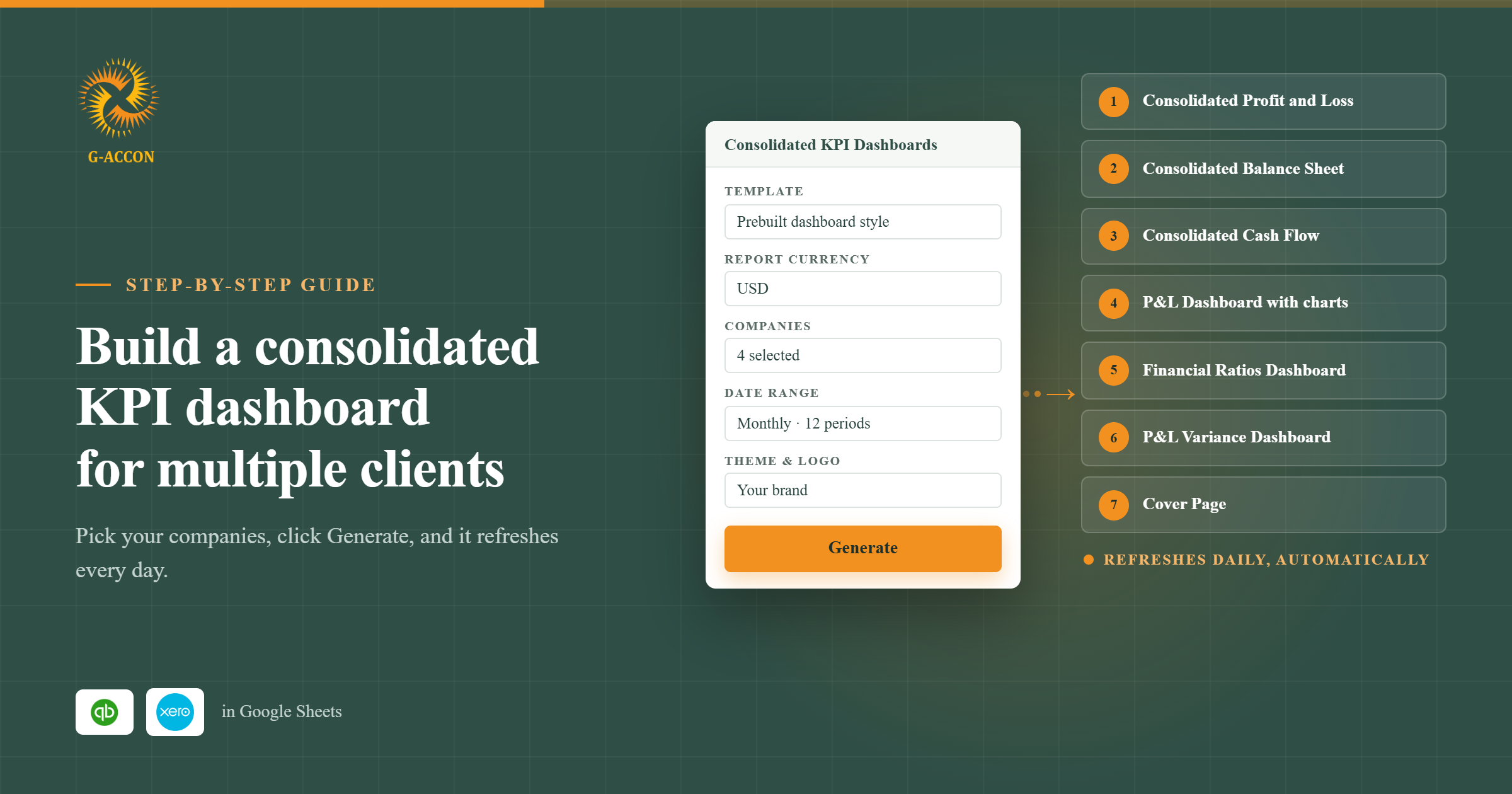
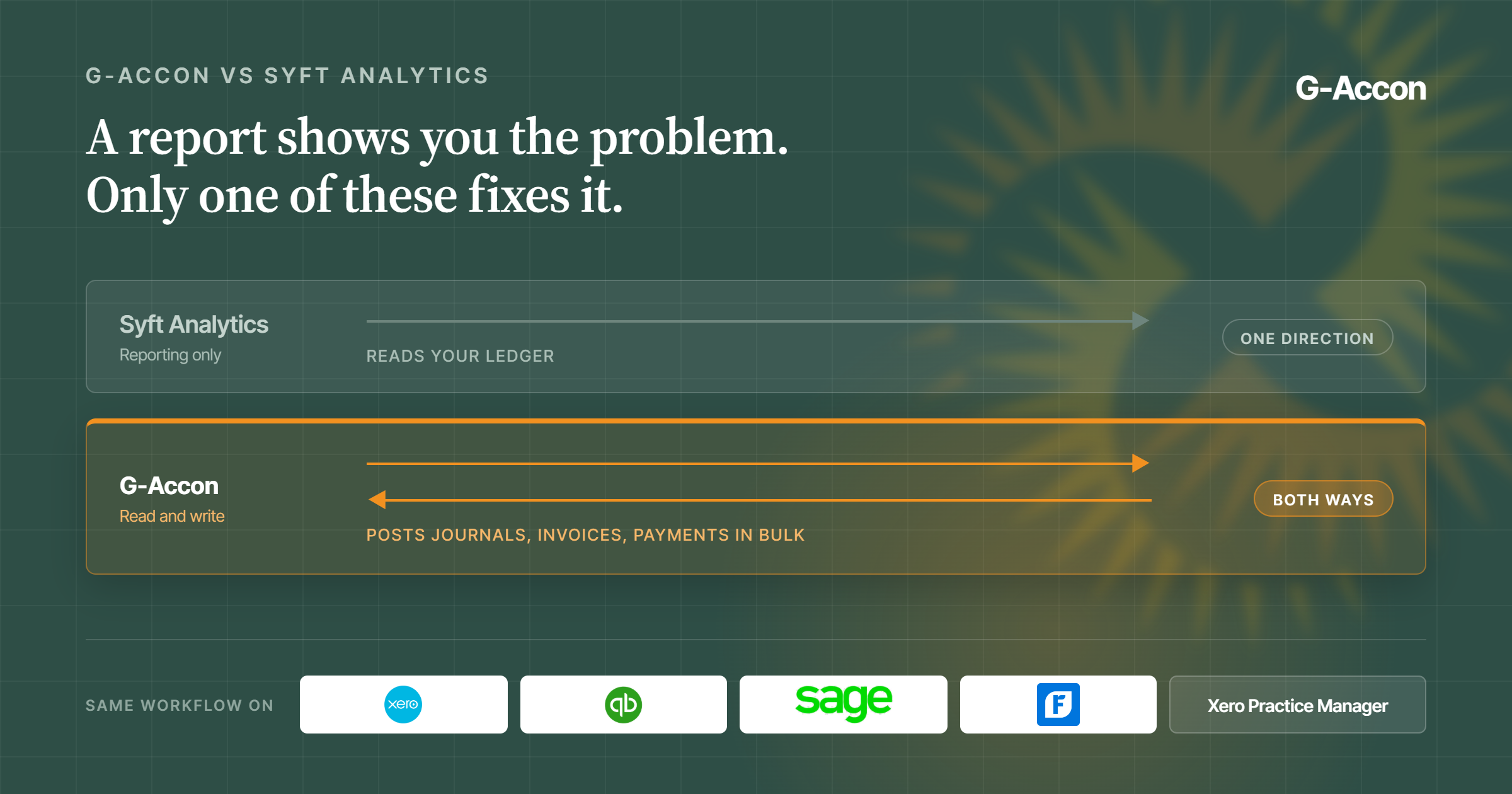
Modern consolidation tools can automatically pull data from Xero, QuickBooks, Sage, FreshBooks - whatever you're using. They handle currency conversions, intercompany eliminations, and multi-entity consolidation without you touching a spreadsheet.
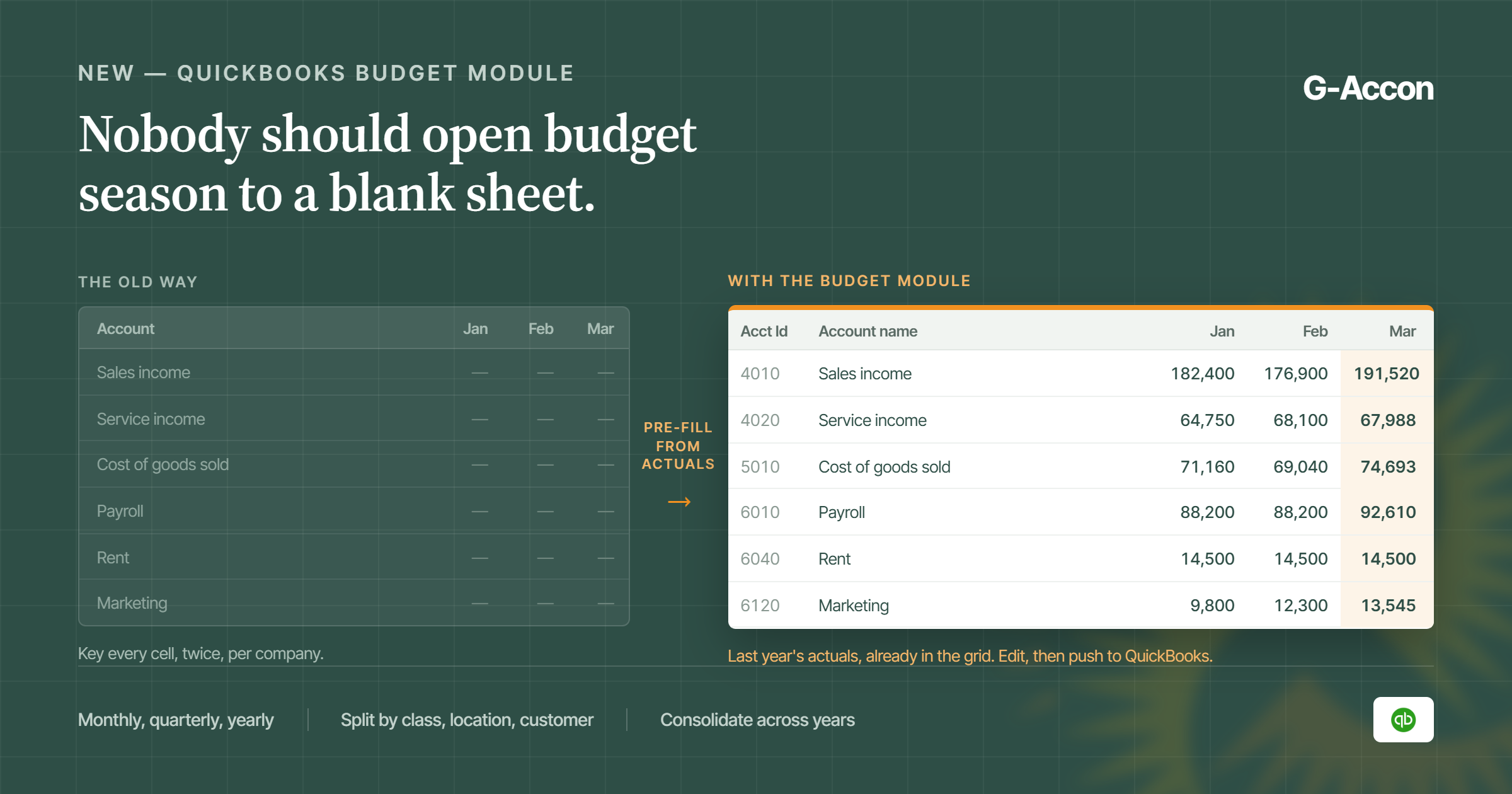
Automation can dramatically reduce data consolidation time. That's not a small improvement - that's transformative.
Run Preliminary Closes
Don't wait until the month actually ends to start your close. Run preliminary closes a few days before month-end. This lets you catch and fix issues while there's still time.
You smooth out the workload instead of cramming everything into the first week of the new month. You reduce stress by killing last-minute surprises. And you catch errors when they're still easy to fix.
Standardize Your Reconciliations
Create templates and standard procedures for your common reconciliations. When everyone follows the same format, reviews go much faster, and errors stand out.
Set up automated reconciliation for your high-volume stuff - bank accounts, credit cards, that kind of thing. Save your team's brainpower for reconciliations that require human judgment.
Move Toward Continuous Close
The fastest companies don't treat close like this big monthly event. They're reconciling accounts and updating reports all month long.
With continuous close, you're spreading the work across 30 days instead of cramming it into 5. When month-end shows up, you're just finalizing a few things instead of starting from scratch.
Organizations using continuous close practices complete their close significantly faster than teams using traditional monthly cycles.
Get Real Visibility Into Your Process
Use something centralized to track close progress. Everyone should be able to see what's done, what's in progress, where the bottlenecks are, and who needs help.
This transparency eliminates those constant "where are we?" meetings that eat up time during close week.
What Separates the Fast Closers From Everyone Else
Teams that consistently close in 3 to 5 days aren't magic. They're just doing a few things differently.
They've automated the routine stuff that doesn't need human judgment. They've documented their processes so well that anyone could jump in and complete a task. They've invested in tools that give them real-time visibility into their financial data.
But the real difference? They treat close as a process to optimize, not some necessary evil they just have to endure every month.
They track their close metrics month over month. They do retrospectives to figure out what went wrong and what went right. They experiment with new approaches and actually measure whether those changes work.
And here's probably the biggest thing: they've moved beyond spreadsheet-based consolidation. They use purpose-built tools that automate the tedious parts so their teams can focus on actual analysis and insights instead of data entry.
So Where Do You Go From Here?
If your close is taking longer than it should, you've got some choices to make.
You could hire more people. But that just scales your inefficient process - you're throwing bodies at the problem instead of fixing it. You could push your team to work faster. But that usually just leads to mistakes and burnout.
Or you could actually address the root cause. Modernize your close process with the right tools and workflows. Fix the underlying inefficiencies instead of just working around them.
The teams hitting those 3 to 5-day closes aren't working harder than you. They're working smarter. They've got systems that automate consolidation, eliminate manual data entry, and give them real-time visibility into where their close actually stands.
Your close time isn't some fixed constraint you have to live with. It's a choice. The question is just how much longer you want to spend chasing spreadsheets when you could be delivering actual insights.
Ready to cut your close time in half?
G-Accon automates multi-entity consolidation and financial reporting for teams using Xero, QuickBooks, Sage, and FreshBooks. See how accounting teams are closing faster without sacrificing accuracy.