Tariffs don't just live in press releases. They show up in your supplier's emails, your shipping invoices, and eventually, in tense budget meetings where everyone's looking at you for answers.
The recent wave of U.S. tariff announcements has companies on edge, and not just American ones. Businesses around the world are trying to figure out if this is temporary noise or the start of something that'll reshape their entire cost structure. And when things get shaky like this, everyone turns to Financial Planning and Analysis (FP&A) for clarity.
The challenge isn't that finance teams lack the skills. It's about moving fast enough with data you can trust when the rules keep changing, and your carefully built assumptions start falling apart.
How Tariffs Impact Your Supply Chain and Business Operations
On paper, tariffs are supposed to make imported goods more expensive to protect local industries. In reality? They mess with a lot more than just pricing.
Think about a manufacturer who's spent years building relationships with overseas suppliers. Or a distributor sourcing from multiple countries to keep costs down and inventory flowing. Even service companies get hit if they depend on imported equipment or tools.
When tariffs spike, input costs jump. Deliveries slow down. Supplier relationships get strained. You might need to find new sources fast, and you won't always get the same quality or reliability. Then counter-tariffs can turn a bad situation even worse by hitting you from both sides.
For your customers, this might mean higher prices or products becoming harder to get. For your business, it's shrinking margins, slower sales, or shelving that expansion you'd been planning. This is how market chaos starts, and this is exactly why finance teams can't afford to just wait and see what happens.
Why FP&A Teams Need Real-Time Financial Forecasting During Tariff Uncertainty
During normal times, FP&A work has a predictable flow. You close the month. Update the forecast. Build the annual plan. Then repeat.
Tariff chaos breaks that rhythm completely. Now, Executives don't want last month's numbers; they want to know what changed since Tuesday.

One of the most important shifts that high-performing FP&A teams make is moving away from reactive reporting. Instead of just responding to what’s already happened, they work proactively to stay ahead of changes as they unfold. This requires tighter feedback loops, more frequent updates to key assumptions, and a leadership focus that’s grounded in today’s data, not last quarter’s.
Forecasts need to become dynamic. They shouldn’t just be static documents you dust off every few months. You don’t have to rebuild your entire financial model each week, but the key drivers, like tariff costs, shipping rates, and customer behavior, should always reflect the most current realities. If your pricing is changing, revenue assumptions may need adjusting. If teams are accelerating or delaying spending, your expense timing has to shift too.
Regular check-ins with sales, operations, and procurement help keep everything aligned. When these groups share updates in real time, risks come into view earlier, and opportunities emerge more clearly. Instead of last-minute surprises or top-down mandates, decisions start to feel shared. People understand what’s driving the choices, and that’s how you build stronger buy-in.
Using Scenario Planning to Prepare for Tariff-Driven Market Changes
Uncertainty breeds anxiety, but scenario planning transforms that anxiety into real preparation.
Build a few simple, realistic scenarios, and you can test potential futures before they actually arrive. What if supplier costs spike to 20% instead of 10%? What if demand drops in our biggest region? What if we have to switch suppliers mid-quarter and face delivery delays?
These models don't need to be complex. They just need to reflect real decisions you might have to make. The value isn't in the spreadsheet itself, it's in understanding how sensitive your business is to different types of change. That clarity helps leadership identify which levers actually move the needle and which risks are worth worrying about versus which ones are just noise.
When you've already mapped out scenarios, you respond way faster when conditions shift. No scrambling, and no emergency meetings where everyone's seeing the numbers for the first time. You've already thought through the trade-offs, so you can act with confidence instead of panic.
How to Maintain Cash Flow Visibility During Market Volatility
During market upheaval, cash is often your most honest indicator. That's because cash moves in real time, while profit can mask problems for months.
Tariffs hit your costs immediately, but your revenue takes time to adjust. So margins get squeezed before you can even react. Meanwhile, customers might stretch their payment terms. Inventory ties up more cash than you planned. Suddenly, your cash position is way tighter even though the P&L still looks okay on paper.
This is why maintaining clear, current cash visibility prevents those reactive decisions that make things worse. When leadership sees pressure points early, they can adjust calmly. They can renegotiate terms, time purchases differently, manage working capital strategically—instead of making desperate moves that create new problems down the line.
Keep your cash views simple and focused on near-term inflows and outflows. Everyone should be able to answer one key question at any moment: Are we safe over the next 60 to 90 days? When cash visibility is strong, decisions feel measured, and the business responds with control instead of panic.
Communicating Financial Analysis to Leadership During Uncertain Times
Even brilliant analysis fails if nobody understands it. During uncertain times, your job is to communicate in plain English, what changed, why it matters, and what the options are.
Skip the 50-tab spreadsheet with no explanation. Instead, deliver focused updates that connect numbers directly to decisions people actually need to make. When you communicate clearly and consistently, something interesting happens: trust builds. Other departments start engaging earlier. Finance stops being the team that just says no and becomes the team that helps figure out how to move forward.
Streamline FP&A Reporting with Automated Data Connections
Many FP&A teams run their world in Google Sheets, and for good reason. It's flexible, familiar, and everyone already knows how to use it.
But the spreadsheet itself isn't usually the problem. It's all the manual work around it. Exporting data from your accounting system. Copying files. Fixing broken formulas. Trying to remember which version is the latest one. That's where time just disappears, and that's where mistakes start creeping in.
G-Accon is built to eliminate that friction; it connects Google Sheets directly to accounting systems like Xero and QuickBooks, so you can pull structured data into Sheets and refresh it whenever you need, without rebuilding reports from scratch each time.
During market turbulence, this speed really matters. When you can refresh data quickly, your forecasts stay relevant. Your scenario models stay tied to real numbers. And your cash views stay current. You respond with confidence instead of guesswork.
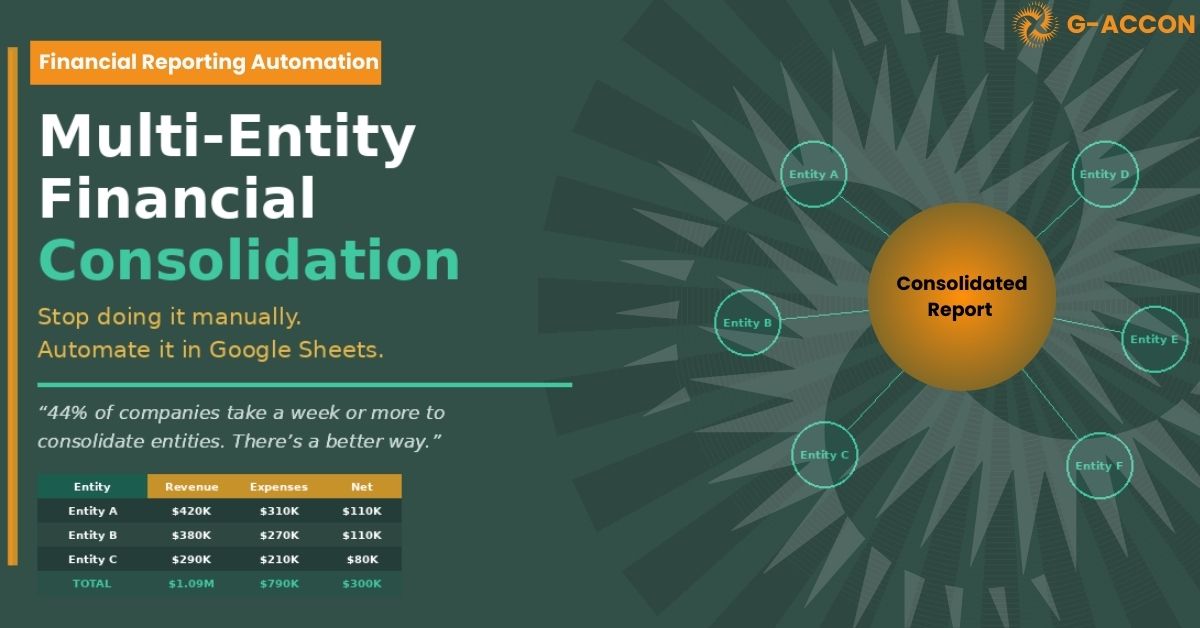
If you're managing multiple entities or clients, G-Accon supports consolidated reporting so you're not manually stitching files together while trying to meet a tight deadline. The goal isn't fancier reports, it's calmer decision-making because your numbers are easier to trust.
Building Financial Planning Resilience in Volatile Markets
Market uncertainty doesn't reward perfection. It rewards readiness.
Conditions can shift faster than most teams can update a monthly plan. That's why successful FP&A teams during tariff-driven volatility stick to the fundamentals: keep critical numbers fresh, test assumptions often, communicate clearly, and use tools that remove unnecessary friction from your workflow.
"The truth is, great leadership comes from people, not software. But the right tools free good teams to think strategically, ask better questions, and guide decisions. Instead of spending hours compiling spreadsheets and fixing errors that shouldn’t exist in the first place, they stay focused on what actually drives impact. Clarity, speed, and trust are the advantages of smart workflows that remove friction and help FP&A teams lead through volatility."___G-Accon
When finance teams can trust their data and move quickly in tools they already know, they're better positioned to guide the business through change with calm and clarity. Tariffs will keep shifting. Markets will stay choppy. But with strong FP&A leadership and connected workflows, uncertainty becomes something you manage, not something that manages you.