Most finance teams don’t decide to look at ERP software because they want to; they do it because something broke. The month-end close took eleven days. The company acquired a second entity, and the spreadsheets that held everything together started showing their age. Or a new controller walked in, looked at the setup, and said, tactfully, that this wasn’t sustainable.
That moment is where most ERP conversations start. And for lean finance teams, the ones running a $20 million business with two accountants and a controller who also handles FP&A, the decision is genuinely complicated.
Because ERP can mean a lot of things; it can mean NetSuite or SAP: a year-long project, a seven-figure commitment. It can also mean a well-integrated setup that connects your GL, your reporting, and your source systems without rebuilding your entire operation.
This guide helps you tell the difference.
What is ERP accounting?
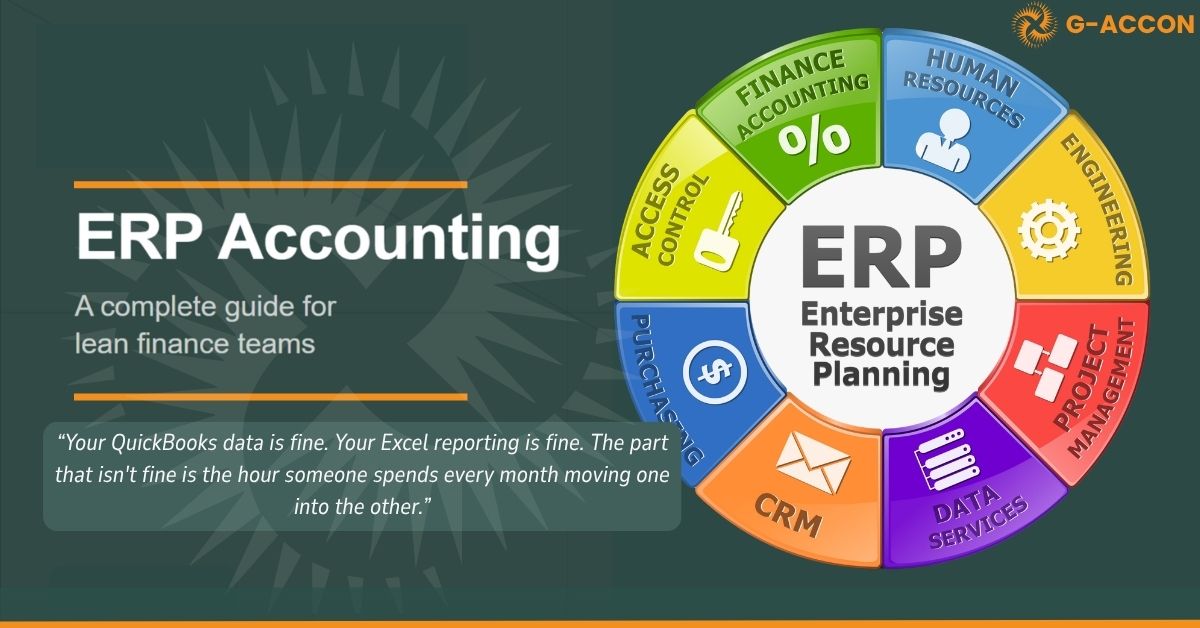
ERP stands for Enterprise Resource Planning, which tells you almost nothing useful. The term was coined in the 1990s to describe systems that connected different business functions into one database: manufacturing, inventory, HR, payroll, procurement, and finance all living in the same platform, sharing the same data.
The accounting module inside an ERP does the things you’d expect: general ledger, accounts payable, accounts receivable, bank reconciliation, financial reporting, and multi-entity consolidation. But the difference between ERP accounting and standalone accounting software isn’t the accounting, it’s the integration. In a proper ERP, when your warehouse team ships an order, that transaction flows automatically into the GL.
For lean finance teams, the relevant question isn’t “what is ERP?” It’s “what problem am I actually trying to solve, and is ERP the right tool for it?” Those are two very different questions, and most ERP sales conversations conflate them.
What lean finance teams are actually dealing with
A lean finance team, let’s say a controller, a senior accountant, and maybe a part-time bookkeeper, is usually managing several things at once that don’t quite fit together cleanly.
There’s the source system. For most small and mid-sized businesses, that’s QuickBooks Online, Xero, or Sage. It handles transactions well. It doesn’t handle multi-entity reporting, complex budget-to-actual variance analysis, or rolling forecasts in any meaningful way.
Then there’s the reporting layer; usually, Excel or Google Sheets is built and maintained by whoever has the most patience. It works until it doesn’t, until formulas break, version control falls apart, or the person who built it leaves.
What lean teams usually need isn’t a system that replaces all of these things; they need these things to connect better. The question is whether you need a full ERP to achieve that, or whether a more targeted integration solves the same problem at a fraction of the cost.
The real cost of ERP, and why it hits lean teams hardest
According to implementation studies, 50% of ERP projects fail on their first attempt, with most exceeding their initial budgets by three to four times. Those numbers feel abstract until you’re the one managing the implementation while also trying to close the books every month.
For a lean finance team, ERP implementation isn’t just a financial cost. It’s a time cost, and the people who pay it are the same people already running at capacity. Implementation projects pull the controller out of their actual job for months.
The average ERP implementation cost for a small business runs approximately $9,000 per user, before customisation, before integration work, before the inevitable scope creep. For a team of three, that’s a floor, not a ceiling.
What to actually look for when evaluating ERP accounting
If you've decided that your current setup genuinely can't scale and you're in the market, here's what matters, and what tends to get glossed over in demos.
Real integration depth, not just compatibility.
Every ERP vendor will tell you their system integrates with your existing tools. The question is how deeply and in which direction. Does data flow both ways, or only into the ERP? Can you push updated actuals back to your planning tool, or does everything have to live inside the ERP to work properly? Two-way sync matters more than it sounds when you're running reporting and analysis outside the core system.
Chart of accounts flexibility.
Your existing chart of accounts reflects decisions made over the years about how your business tracks performance. A new ERP that forces you to restructure it adds a massive hidden project to implementation, one that often only becomes visible after you've signed the contract.
Ask specifically how the system handles mapping to your existing structure, and whether you can maintain your current reporting dimensions without rebuilding them.
Close process impact.
The month-end close is where most finance teams feel their current system's limitations most acutely. Ask vendors to walk you through a close in their system, specifically, not a general product demo, but your actual close process: journal entries, intercompany eliminations, bank reconciliation, revenue cut-off. The gap between a polished demo and a real close is often where teams get a clearer picture of what they're buying.
User adoption reality.
ERPs fail for a lot of reasons, but a significant share of them fail because the people outside finance, in operations, sales, and procurement, don't use them consistently. If the system depends on every department entering data correctly and on time, and your company doesn't have the IT infrastructure or change management capacity to enforce that, the accounting module will only be as good as the data it receives. For lean teams without a dedicated IT function, this is a serious practical concern.
Reporting and export capabilities.
This one surprises people: many ERP systems have mediocre native reporting. They're excellent at storing and processing transactions, less excellent at producing the flexible, presentation-ready reports that finance teams actually need.
Find out what your reporting workflow looks like after implementation. If the answer is "you'll still pull data into Excel for final analysis," the ERP hasn't replaced your current process; it's just added a step to it.
When full ERP is the right answer
There are situations where ERP is clearly the right call, and it’s worth being direct about them. If you’re managing more than two legal entities with different currencies and intercompany transactions, a standalone accounting platform genuinely can’t hold it together.
If your business has significant inventory, manufacturing, distribution, and wholesale, and your accounting system isn’t connected to your inventory system, you’re making decisions with incomplete cost data.
If you’re approaching an IPO, a significant acquisition, or a level of scrutiny that requires auditable, system-enforced controls, you’ll likely need the infrastructure that a proper ERP provides.
If you’re in any of these situations, the implementation cost is real but justified. The question shifts from “do we need ERP?” to “which one, and how do we implement it without breaking the business?”
ERP or integration: where does your team stand?
Click Yes or No on each question, *your result appears at the bottom.
Signals that point toward full ERP
Do you manage more than one legal entity, especially across different currencies?
Consolidation and intercompany eliminations get painful without ERP at this scale.
Does your business carry significant inventory that needs to be updated in your accounting in real time?
Disconnected inventory and GL data lead to bad cost reporting and missed margin signals.
Are you preparing for an IPO, acquisition, or a significant increase in audit and compliance pressure?
At this level you’ll need system-enforced controls, not manual processes and spreadsheet sign-offs.
Do multiple departments (operations, sales, procurement) need to work inside one shared system?
If data handoffs between teams are a constant source of errors, ERP addresses the root cause.
Signals that point toward better integration
Is your current accounting system (QuickBooks Online, Xero, Sage) mostly working for day-to-day transactions?
If the core system works, replacing it may create more disruption than the problem you’re solving.
Is slow or unreliable reporting the biggest bottleneck your finance team faces right now?
A live sync between your accounting platform and Google Sheets may fix the real issue without touching anything else.
Is your team spending significant time on manual exports, CSV reformatting, or copy-pasting data between systems each month?
Automation removes this drag entirely, exactly the problem accounting-to-Sheets integrations are built for.
Does your finance team prefer building reports and analysis in Google Sheets rather than inside the accounting platform itself?
A spreadsheet-native workflow may fit your team far better than moving everything into a full ERP interface.
When ERP isn’t the answer, and what is
Most businesses evaluating ERP don't need ERP yet. What they need is better integration between the systems they already have.
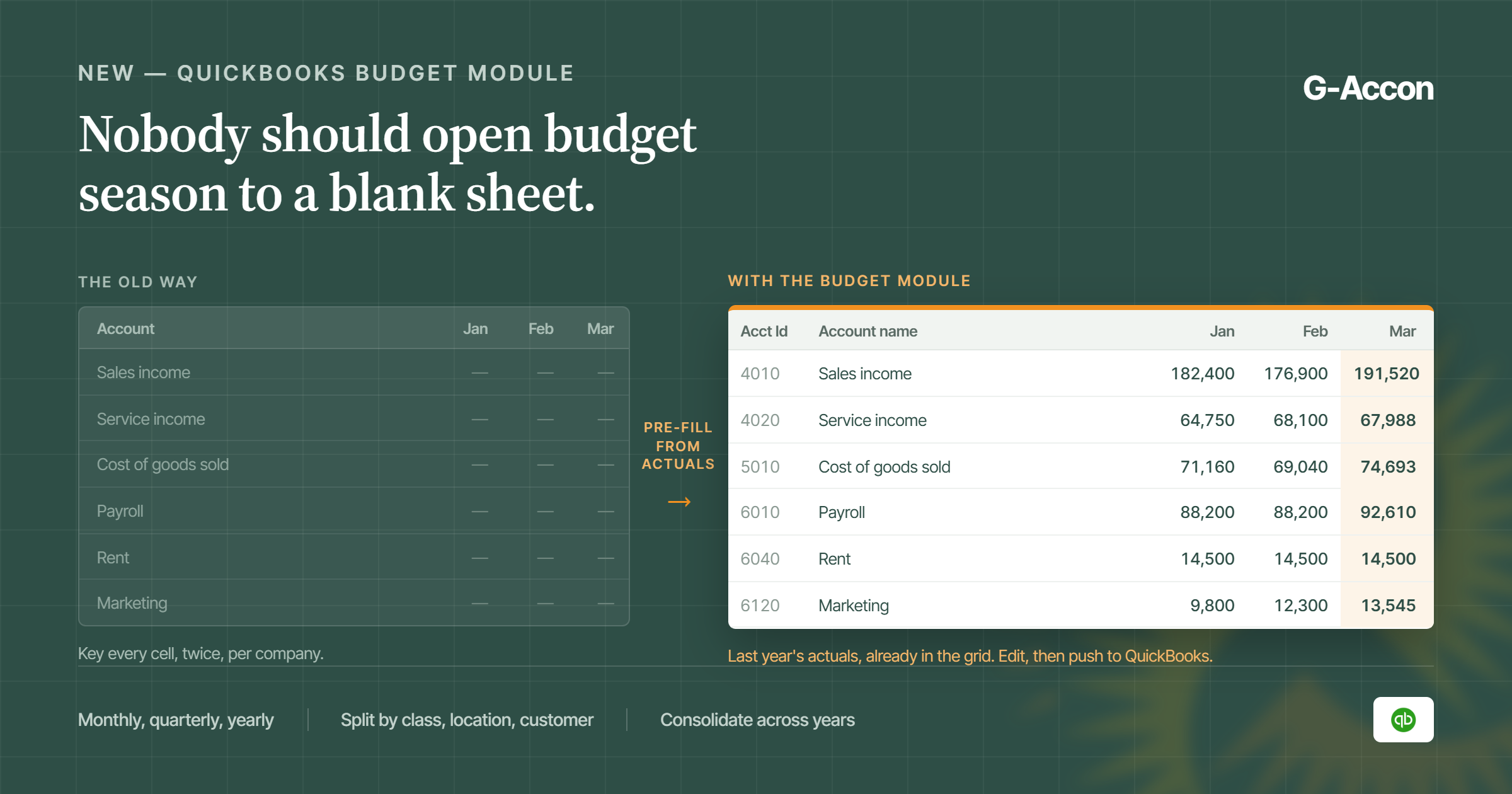
The typical setup, QuickBooks Online or Xero as the accounting system, Google Sheets as the reporting and planning layer, isn't broken in principle. It's broken in practice because the connection between those two things is manual.
Someone exports a report from QBO, pastes it into a spreadsheet, reformats it, and builds their analysis on top of it. Every month. That process introduces errors, takes time that could be spent on analysis, and breaks the moment anything changes in the source system.
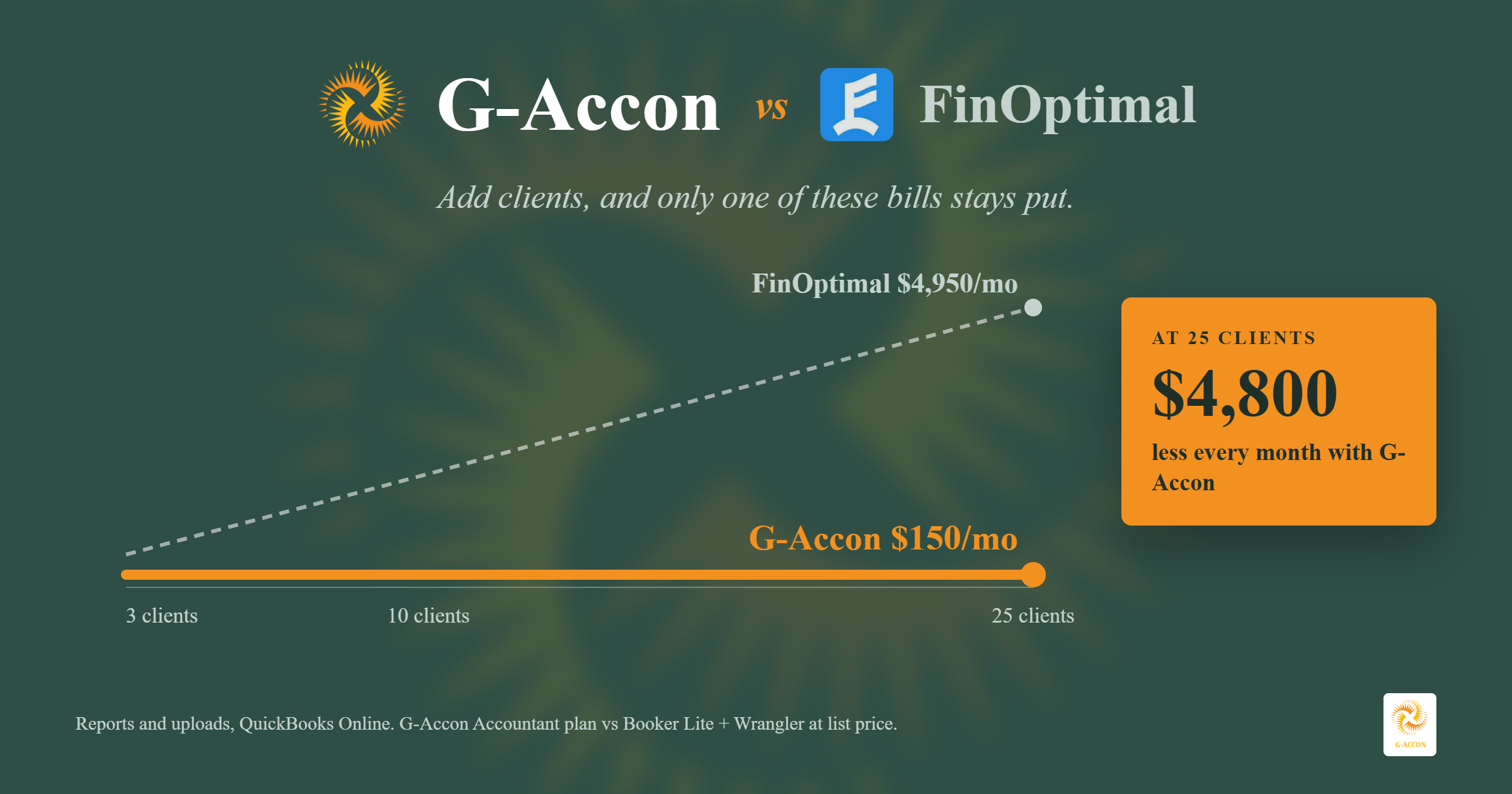
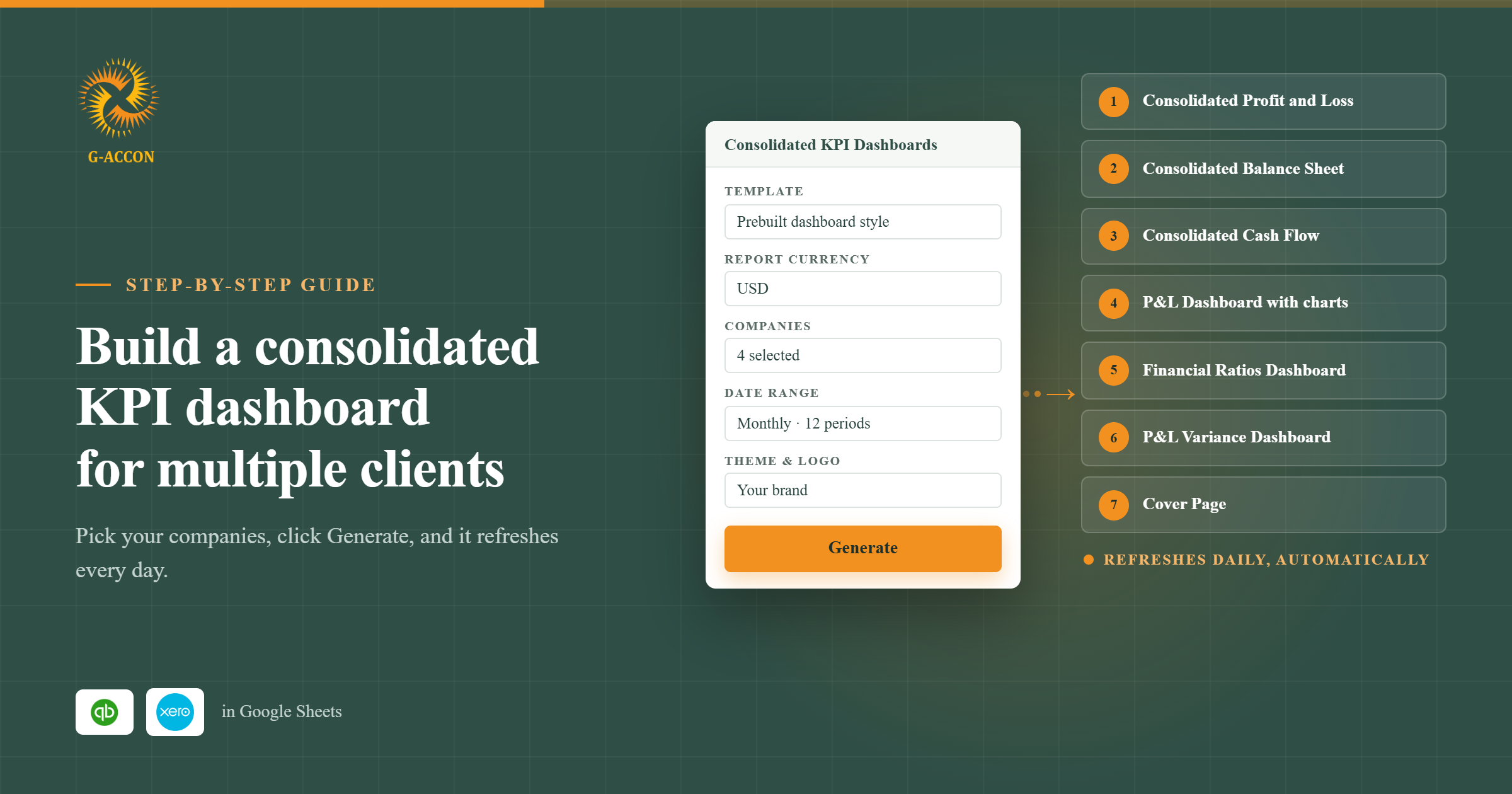
What solves that problem isn't an ERP. It's a reliable, automated connection between the accounting system and the reporting layer. G-Accon does exactly that: it connects Google Sheets directly to QuickBooks Online, Xero, Sage, and FreshBooks, syncing your financial data automatically without manual exports. Your GL, your P&L, your AR aging, your custom reports, live in Google Sheets, refreshed on demand, structured the way your team actually uses them.
|
For a lean finance team, this changes the close process materially. Instead of spending the first week of every month reassembling data from multiple sources, you refresh your sheet, and the numbers are current. |
It also scales in ways that matter for growing businesses. When you add a second QBO company, you pull it into the same sheet. When you need a new report, you build it in Google Sheets using data that's already there. When leadership asks for a custom analysis, you don't have to request an IT change or wait for a developer; you build it yourself.
The right question for lean finance teams
The ERP conversation often starts with "What system should we buy?" But the more useful question is "what's actually slowing us down, and what's the lightest thing that fixes it?"
For some businesses, the answer is a full ERP. For more businesses than the ERP industry would like to admit, the answer is a better integration between existing tools, one that gives the finance team the data they need, in the format they work in, without the implementation burden that comes with replacing everything.
Knowing which situation you're in is worth figuring out before you sign anything.
|
Ready to connect Google Sheets to your accounting platform? G-Accon syncs your QBO, Xero, Sage, or FreshBooks data automatically, no ERP required. |